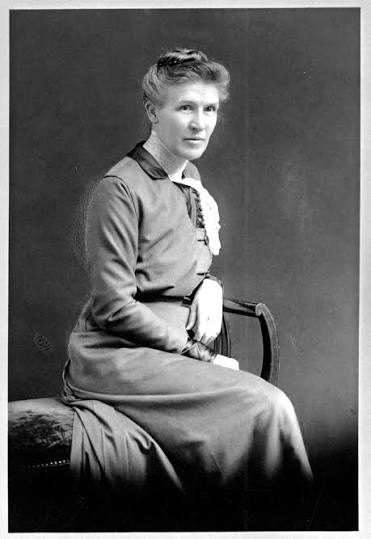
 Laura Johnson Wylie (December 1, 1855 - April 2, 1932) was an influential American educator, literary scholar, suffragist, and pioneer in women's higher education.
Partner Gertrude Buck
Queer Places:
Vassar College (Seven Sisters), 124 Raymond Ave, Poughkeepsie, NY 12604
Yale University (Ivy League), 38 Hillhouse Ave, New Haven, CT 06520
112 Market St, Poughkeepsie, NY 12601, USA
Woodlands Cemetery, 4000 Woodland Ave, Philadelphia, PA 19104, United States
Laura Johnson Wylie (December 1, 1855 - April 2, 1932) was an influential American educator, literary scholar, suffragist, and pioneer in women's higher education.
Born in Milton, Pennsylvania, on December 1, 1855, to William Theodore Wylie and Sarah Murray Johnson Wylie, she dedicated her life to academic excellence, progressive educational reform, and social activism before passing away on April 2, 1932. She is buried at Woodlands Cemetery in Philadelphia, Pennsylvania.
Wylie spent her childhood on the move, learning directly from her father and helping care for a growing collection of half-siblings. When she entered Vassar College as a freshman, she was initially far behind her peers; she later candidly admitted that she could barely spell and knew almost nothing about geography.
However, her voracious reading habits—constantly found in the library with a book—helped her catch up quickly. She graduated in 1877 as the valedictorian of her 45-person class.
Driven by her love of the written word, Wylie became one of the first women admitted to graduate courses at Yale University. While teaching at private secondary schools to support her studies, she wrote a thesis titled "Sources of English Criticism," marking the first thesis by a woman published by Yale. In 1894, she became a member of the historic first group of women to receive a Ph.D. from Yale.
Wylie returned to Vassar in 1895 as an English instructor, and within two years, she rose to chair of the English Department—a position she held until 1921.
As chair, she revolutionized department philosophy and curriculum:
She shifted the core focus away from purely historical literature toward writing and developing a cohesive, creative style of expression.
Freshmen work was crucial to her vision. She ensured that the department's best teachers worked alongside new instructors to guide first-year students, emphasizing creative expression over mechanical or logical rigidity to foster a living sense of literature.
Department meetings multiplied under her leadership, turning into open forums for free discussion and experimental teaching methods. This progressive impact culminated in her final year with an experimental course designed specifically for seniors planning to attend graduate school.
Wylie was a deeply social and approachable figure. She could often be seen laughing with students in the halls of Rocky Hall or holding intimate discussions in her office, with a particular fondness for poets.
Together with her domestic and intellectual partner, Vassar Professor Gertrude Buck, Wylie hosted students every Thursday afternoon at their home to play with Wylie's beloved dogs and discuss classes, politics, and life.
As highlighted by historian Lillian Faderman in To Believe In Women: What Lesbians Have Done For America, Wylie and Buck’s partnership belonged to a vital network of early academic women who chose one another over traditional marriages. These arrangements allowed female scholars to preserve their professional autonomy, salaries, and institutional standing while providing essential emotional and intellectual support. At Vassar, Wellesley, Bryn Mawr, and beyond, such partnerships paved the way for future generations of women in higher education.
Wylie's influence extended far beyond the campus into the surrounding community of Poughkeepsie, New York:
Recognized regionally as a leader of the suffrage movement, Wylie co-founded the Equal Suffrage League with two other Vassar professors in 1909. After the passage of the 19th Amendment, the League evolved into the Women's City and County Club, offering year-round civic classes for women. Wylie served as its president until 1928, when she was named honorary president for life.
Wylie and Buck practiced a broad social philosophy that bridged academia and the local town. Buck founded the Poughkeepsie Community Theatre, on whose board Wylie served. Their home on Market Street became a vibrant rallying place for suffrage, labor reform, and community movements.
Following Wylie's death on April 2, 1932, her commitment to progressive causes and Poughkeepsie town-gown relations lived on:
She left $10,000 to Vassar specifically earmarked to sustain Gertrude Buck’s community theater.
The home she shared with Buck was left to a trust, allowing the Women's City and County Club to use it rent-free before purchasing it outright. Today, 112 Market Street continues its progressive legacy as the headquarters of the environmental organization Hudson Sloop Clearwater.
In 1934, friends published "Miss Wylie of Vassar," a collection of memorial essays celebrating her dedication to humanity and teaching. Concluding the volume, Eleanor Roosevelt summarized Wylie's enduring impact: "Those of us who knew her will miss her always but her influence will live down through the years as long as we who remember her find ourselves unconsciously living up to her ideals and enthusiasms."
References:
 To Believe In Women: What Lesbians Have Done For America - A History – A Compelling Landmark Account of 19th and 20th Century Rights by Lillian Faderman |
Other references:
Support this project
This website is a passion project researched, developed, and funded entirely by me. If you find the content valuable and would like to help support the ongoing research and hosting costs, any contribution is deeply appreciated.
Thank you for keeping this independent resource alive!
My books on Amazon: Elisa Rolle's books